

From the shadowy ridges of the mountains to the rolling farmland pastures,
Monroe County holds more than natural beauty—it guards secrets of a darker past. Whispers of unsolved murders, eerie legends, and mysterious happenings still echo through the hills and fields.
Join us as we uncover four haunted places where history refuses to stay buried.
TELLICO PLAINS

Murders of the
Kirkland Bushwhackers
VONORE
_edited.jpg)
Haunted Citico
MADISONVILLE

Mysterious
Crop Circles
SWEETWATER
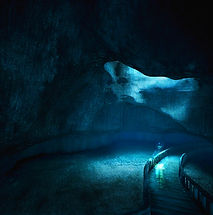
The Haunted Depths
of the Lost Sea
If you dare, take the drive tour — and see for yourself if the past still lingers in the shadows.
Hey there, adventure-seekers! Just a quick reminder that driving at night can be a bit tricky, so be sure to stay alert! And remember, no trespassing on private properties. If you’re planning to hike, make it a buddy trip and always share your plans with someone. Stay safe out there!

Murders of the
Kirkland bushwhackers
In the mid-1800s, the mountains between Robbinsville, North Carolina, and Monroe County, Tennessee, became the hunting ground of a gang of army deserters and family members known as bushwhackers—irregular militia who used guerrilla warfare, ambushes, and sheer brutality to survive. The Kirkland Bushwhackers were led by John Jackson Kirkland, born in 1827 in Jackson County, North Carolina. He had served as a Second Lieutenant in the 3rd Mountain Mounted Infantry of the Confederate Army but deserted during the war. Most of his gang were also Confederate deserters. The gang’s hideouts were scattered across remote terrain—Ball Play and Citico Creek near present-day Madisonville and Tellico Plains, and even Cades Cove, where they kept stolen livestock. Kirkland’s violence was fueled by a personal vendetta. After Union soldiers destroyed his family’s grist mill on Turkey Creek—which once stood atop the current waterfall—he vowed revenge against anyone in Union blue.
A Crime That Shocked the Mountains
John Kirkland and his men were ruthless, and no one was off-limits. Men, women, and children were all victims.
One of the gang’s most notorious crimes occurred when they ambushed a young couple carrying payroll money for Union soldiers. The couple had their newborn with them. As they were held at gunpoint, the baby began to cry. Fearing the noise would reveal their position, Kirkland ordered the parents to silence the child. When they couldn’t, he ripped the baby from their arms, killed it, and hid the body inside a hollow tree trunk—a chilling example of his cruelty.
The Skirmish at Little Toqua - December 7, 1864
On this day, a Union scouting party of 12 men, led by Captain Abbott, was heading toward a tanyard on Tanyard Branch, near the general store of Squire S.S. Glenn. Unexpectedly, they ran into 60–80 Kirkland men near the property of John Skidmore on Little Toqua Creek. The Union soldiers were hopelessly outnumbered. In the first volley, Richard Mills was killed instantly. John Brown was shot in the thigh, hip, and neck but survived. Others were captured or barely escaped. Captured were George Williams, Bart Williams, Jeff Devers, Bass Shaw, and his 17-year-old son Joe Berry Shaw (later released because of his age).Those who escaped included Thomas Mills, Squire Randolph Laney (wounded), Tom & John Skidmore, and Dave Jones. John Brown later testified in 1882 that he crawled 200 yards to safety, bleeding heavily. Four local women—Jenny and Margaret Skidmore, Fanny Jenkins, and Nancy Thompson—wrapped him in a quilt and carried him to safety, saving his life. Elizabeth Kirkland Williams, wife of George Williams, recalled hearing gunfire and seeing her husband and others taken prisoner. She even recognized the mule her husband had been riding, which returned home on its own after the ambush.
A burial party from Loudon, Tennessee, led by Lieutenant Charles Anthony (brother-in-law of George and Bart Williams), found Brown alive and buried the dead—including Mills—at what is now Little Toqua Cemetery, where Mills’ grave remains the oldest marked.
Family Betrayal - December 8, 1864
The next day, while prisoners were being moved to Asheville, North Carolina, Bass Shaw was executed by the Kirkland gang at what is now called Shaw Grave Gap on U.S. Highway 69. This killing was especially shocking because Shaw was Kirkland’s uncle by marriage—his wife and Kirkland’s mother were sisters. Shaw’s gravestone also notes that his sons, Jeff and Jim Shaw, were later murdered by the Kirkland Bushwhackers. After the War
After the Civil War ended, indictments for robbery and murder were issued against John Kirkland and his men. But no one dared enter the mountains to arrest him—doing so would have been a death sentence. Kirkland eventually moved to Polk County, Tennessee, where he lived a long life, dying in 1902 at the age of 75—remarkable for a man with so many enemies.
Visiting the relics today
The Unknown Grave
Mud Gap Trail – Cherohala Skyway
At this quiet spot lies the grave of an unidentified man, killed long ago by the infamous Kirkland Bushwhackers along the Skyway. The monument standing here is not the original. That stone disappeared more than 20 years ago. To restore the site, Charles Hall and his friends hauled stone, concrete, and water by jeep over Whigg Meadows and set this marker in its place.
They chose to preserve every detail of the first monument—including the misspelling of Bushwhacker—a reminder that even mistakes can become part of history.
Although time has worn away most of the old grist mill ruins at Kirkland Mill Falls—also known as Lower Turkey Creek Falls—in the Cherokee National Forest near Tellico Plains, Tennessee, subtle reminders of the past remain. To the left of the cascading water, a steep staircase, now choked with vines and moss, still clings to the hillside.
It’s peaceful here now, with only the sound of rushing water breaking the silence. Yet, in those still moments, many locals say it feels as if the history of these mountains lingers—close enough to almost touch.

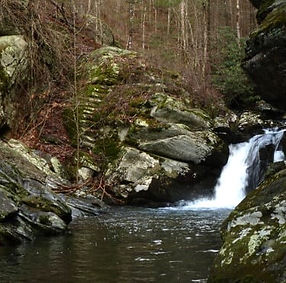
Photo Credit to Amanda Gamble
Haunted citico
The Citico Creek Wilderness in Monroe County, Tennessee, is known for its wild beauty, rugged trails, and remote isolation. But ask any seasoned hiker or hunter, and they’ll tell you that Citico has another side—one steeped in shadow, fear, and the restless whispers of the past.
More haunted than most trail systems in the Southern Appalachians, Citico’s deep woods have a reputation. Those who walk these paths after sundown often report strange noises, flickers of light where none should be, and the creeping sensation of being followed. Some dismiss these tales as mountain superstition, but the stories run too deep, too consistent, to ignore.
.png)
Five of the most feared haunts along Citico Creek
1. Rocky Flats Abandoned Homestead
Hidden among the trees, all that remains of an old 1920s homestead is a moss-covered rock chimney, standing like a gravestone to a forgotten family. Travelers swear the air grows colder here, and that the rustling leaves carry whispers too human to be the wind. Hikers who’ve camped nearby claim they woke to voices warning them to leave. Whether they were dreams or not, it's a risk being here during the night.
2. Jeffrey’s Hell Trail
Named after a hunter who lost his life in the 1930s while searching for his dogs during a brushfire, Jeffrey’s Hell is one of Citico’s most sinister paths. The thick rhododendron creates an almost claustrophobic tunnel, and more than a few hikers have sworn that unseen hands shook the bushes as they passed. Some say it’s Jeffrey himself, forever searching for his lost hounds, still unwilling to leave the forest that claimed him.
3. Stiffknee Trail & Doublecamp Road (FS59)
Even in the brightest noon, much of this trail and road remain cloaked in shadow. Locals whisper of a goblin-like creature that stalks the ridges, pelting travelers with stones. One chilling account tells of campers at Farr Gap who awoke to a hail of rocks slamming into their tent. Terrified, they abandoned all their gear and sped away into the night—never to return. And for those brave enough to push onward, the trail leads only to Slickrock Creek, a place notorious for its own nightly disturbances.
4. Brush Mountain Trail
Remote, overgrown, and rarely traveled, Brush Mountain carries an air of dread that settles over all who dare to tread its path. The trail winds through the remains of an old 1920s lumber camp and the site of the devastating forest fire of 1925. Many loggers perished here—crushed by falling timber or consumed by flame. Locals say their spirits remain, wandering the ridges in eternal unrest. Few ever hike this trail alone, and fewer still in the fading light.
5. Old Crowder Orchard
At the end of a vine-choked trail lies a mountaintop orchard, long since abandoned. On clear moonlit nights, some claim to have seen her—the pale figure of a young girl in a flowing white gown, gliding silently through the ghostly apple trees. They say she was murdered here, though the truth is lost to time. What is certain is that those who have seen her never linger… for she is said to stop and stare if you watch too long.
Stories inspired by Robert Cochran for more intriguing stories about our county check out Citico Wilderness FB Page

Early one Monday morning in 2007 in Madisonville Tennessee, field owner Johnnie Helms had something waiting for her among the tall, golden stalks of her land. An enormous pattern stretched across the land—lines and curves pressed into the earth with flawless precision with otherworldly symmetry.
Word spread quickly, drawing curious onlookers. Some stalks stood tall, untouched, while others lay bent and woven into intricate shapes—pressed down, yet never broken. No footprints or tire tracks disturbed the soil. Only thin lines, left months before by fertilizer runs, marked the field.The location only deepened the mystery. Just the next year, less than half a mile a new formation mirrored the first in its impossible geometry. Investigators who studied the 2007 design had ruled it non-man-made. Researchers from the Independent Crop Circle Researchers Organization rushed to examine the 2008 site, eager to measure energy readings, radiation anomalies, and any hint of something beyond the ordinary. Some speculated the circles could connect to the area’s ancient Native American roots. Monroe County sits amid lands once inhabited by the Cherokee, whose traditions revered the stars, celestial alignments, and sacred geometry. Some wondered if the patterns echoed symbols that had been lost for centuries—messages from the past, or perhaps signs pointing to the heavens.
Adding to the unease were whispered theories about extraterrestrial involvement. The precision, the silence, the sudden appearance—all suggested to some that visitors from beyond Earth had touched these fields. Could these be signals meant for humanity? Or warnings from somewhere in the dark reaches of space? At night, locals reported strange glimmers over the fields—faint lights dancing above the wheat, vanishing before anyone could get close.
Helms’s land is private do not trepass, and the circles no longer remain, but the mystery of those crop circles remain in the community’s memory. Whether the work of clever humans, spirits of the land, or beings from distant worlds, the crop circles of Monroe County left an indelible mark. Perfect, silent, and unexplained, they waited in the wheat like a message from beyond—a riddle that challenged all who dared to look up at the night sky and wonder.
mysterious CROP CIRCLES


The Haunted Depths
of the Lost Sea

Beneath the quiet town of Sweetwater, Tennessee, lies The Lost Sea, a vast underground world steeped in history, legend, and chilling mystery. Known as part of Craighead Caverns, this natural wonder has been used and explored for centuries—first by the Cherokee Indians, then by settlers, soldiers, and explorers.
From a small opening in the mountainside, the cave expands into enormous chambers. Nearly a mile in, “The Council Room” once held traces of the Cherokee—pottery, arrowheads, weapons, and jewelry, all silently telling the story of those who once gathered here.
Long before humans arrived, a giant Pleistocene jaguar roamed these tunnels. Some 20,000 years ago, it lost its way in the darkness and perished deep underground. Its bones, discovered in 1939, now reside in the American Museum of Natural History in New York, while casts of its tracks remain on display at The Lost Sea Visitor Center.
By the 1820s, white settlers used the cave as a natural refrigerator, its steady 58° temperature keeping food fresh year-round. In 1863, Confederate soldiers mined here for gunpowder. A diary from the Civil War tells of a daring Union spy who nearly blew up the operation—before being caught and shot near a large gum tree at the cave entrance. Many say his restless spirit still roams the caverns, searching for a mission left unfinished.
For decades, rumors swirled about an underground lake hidden deep within the cave. It wasn’t until 1905 that 13-year-old Ben Sands discovered it, crawling through a muddy opening into a vast black chamber half-filled with water—too large for his lantern to reveal in full. Through the 1900s, the cave hosted dances, and moonshine operations. Yet alongside its colorful history came strange, unsettling tales:
-
Visitors have reported seeing ghostly Union and Confederate soldiers.
-
A tourist from Florida swore she saw a young Union soldier in a blue cap standing near the water’s edge.
-
One woman felt cold, wet hands poking at her neck multiple times during a tour.
-
Guides have spotted shadowy figures darting through the tunnels—vanishing when approached.
Some believe caves are gateways between worlds, their deep chambers holding on to those who died inside. Others think the jaguar’s spirit still prowls in the dark. Whatever the truth, many who visit The Lost Sea leave with more questions than answers. If you go, remember: the cave is beautiful, vast, and alive with history—but in the deepest shadows, you may find that the past is not entirely gone.
Did you know… The Lost Sea offers an overnight cave adventure?
Explore twisting tunnels by flashlights and spend the night deep underground.
Do you dare stay until morning? Click here for more info...